Book a Consultation
Classifications and Credentials:


Who Maintains a Private Railroad Crossing? Ownership and Responsibility Explained
If your property includes a private railroad crossing, one of the most important things to understand is who keeps it in safe, working condition. The answer isn’t always obvious, and many property owners, tenants, and facility managers are surprised by what private railroad crossing maintenance involves and who pays for it.
Private crossings exist at thousands of locations across the country, connecting farms, industrial facilities, warehouses, and other properties to the road network on the other side of the tracks. Unlike public crossings, which are typically maintained through a shared arrangement between the railroad and the local road authority, private crossings put most of the maintenance burden squarely on the property owner or lessee.
We work on crossings regularly and see the full range of conditions out there. Some are well maintained with solid surfaces and clear sightlines. Others have deteriorated to the point where they’re barely usable. Here’s how private crossing ownership works, what your obligations are under a typical agreement, and how to keep your crossing safe and functional long term.
What Makes a Railroad Crossing “Private”
A private railroad crossing is any crossing not open to general public traffic. It exists to serve a specific property or group of properties, and access is limited to the owner, tenants, employees, and authorized visitors.
Public crossings, by contrast, sit where public roads intersect railroad tracks. They’re assigned DOT inventory numbers, fall under federal and state safety regulations, and are maintained through formal agreements between the railroad and the government entity responsible for the road. Public crossings are also eligible for federal and state improvement funding. Private crossings are not.
The most common private crossings include farm crossings connecting agricultural land on both sides of the tracks, industrial crossings providing access to rail-served facilities, and access crossings linking private driveways or internal roads to public roads. Each type brings its own practical challenges, but the basic framework of responsibility is similar across all of them.
If you’re wondering who owns railroad crossings on or near your property, start with the relationship between the land, the railroad right of way, and the crossing itself.
Who Actually Owns and Controls a Private Crossing
Ownership is more nuanced than it first appears. The railroad typically owns the right of way, which includes the land beneath and immediately surrounding the tracks. The property owner owns the land on one or both sides of that right of way. The crossing itself, meaning the surface material, approach grades, and drainage structures, usually belongs to the property owner even though it sits within the railroad’s right of way.
That distinction determines who handles what. The railroad is generally responsible for the track structure within the crossing area: rails, ties, and ballast. The property owner is responsible for the crossing surface, the approaches on both sides, drainage, signage, and vegetation management around the crossing.
In practice, who owns a crossing and who maintains it are related but separate questions. The railroad owns its right of way, but the property owner has to keep the crossing safe for the people and vehicles using it. If the surface deteriorates, the approaches wash out, or vegetation blocks the sightlines, that’s the property owner’s problem to solve.
This arrangement is spelled out in a private crossing agreement, covered next. If you don’t have a copy on file, request one from the railroad so you know exactly what you’re obligated to maintain. When crossing renewal becomes necessary, knowing your agreement terms upfront prevents disputes about cost sharing later.
The Private Crossing Agreement and What It Covers
Nearly every private railroad crossing is governed by an agreement between the property owner and the railroad. It sets the terms under which the crossing exists: who handles maintenance, who carries the liability, and under what conditions the railroad can close or modify the crossing.
A typical agreement states that the property owner is responsible for the crossing surface and approaches. It requires the owner to maintain adequate sightlines by keeping vegetation trimmed along the tracks. It specifies that the owner assumes liability for accidents or incidents at the crossing. And it confirms that the railroad retains the right to close the crossing temporarily for track work or permanently if conditions warrant.
The agreement may also dictate acceptable surface materials. Some railroads require concrete panels, rubber crossing pads, or other approved systems rather than timber or gravel, so check the agreement before planning any resurfacing or replacement to make sure your investment meets the railroad’s requirements.
Some agreements include cost-sharing provisions, with the railroad covering the track components within the crossing while the property owner covers everything else. That isn’t universal, though, and many agreements place essentially all of the financial responsibility on the property owner.
If your property changed hands and you didn’t receive a copy of the crossing agreement at closing, contact the railroad’s real estate or engineering department. Having that document is essential for understanding your obligations and planning any maintenance work at the crossing.
What Private Railroad Crossing Maintenance Actually Involves
Maintenance covers several categories of work that together keep the crossing safe and usable for the people and equipment that depend on it.
The crossing surface is the most visible component. Whether your crossing uses concrete panels, timber, rubber pads, or asphalt, the surface wears over time from vehicle traffic and weather. Cracked panels, rotted timbers, or potholes in the approach pavement all need attention before they become a hazard for vehicles or an obstruction for rail operations.
Approach grades on both sides must provide a smooth transition from the road surface onto the crossing. If the approaches settle, erode, or develop ruts, vehicles can bottom out or lose traction, which is especially dangerous for trucks and trailers carrying heavy loads.
Drainage is an ongoing responsibility. Water pooling at or near the crossing washes out approach material, undermines the crossing surface, and can compromise the track structure itself. Keeping ditches clear and culverts open is part of the job and shouldn’t get overlooked during routine property maintenance.
Sightline maintenance matters most for safety. Anyone approaching the crossing needs to see far enough down the tracks in both directions to stop safely if a train is coming, which means trimming trees, mowing tall grass, and removing stored materials or equipment that block the view. Private crossings rarely have gates or active warning devices, so clear sightlines are the primary safety measure for everyone who uses the crossing.
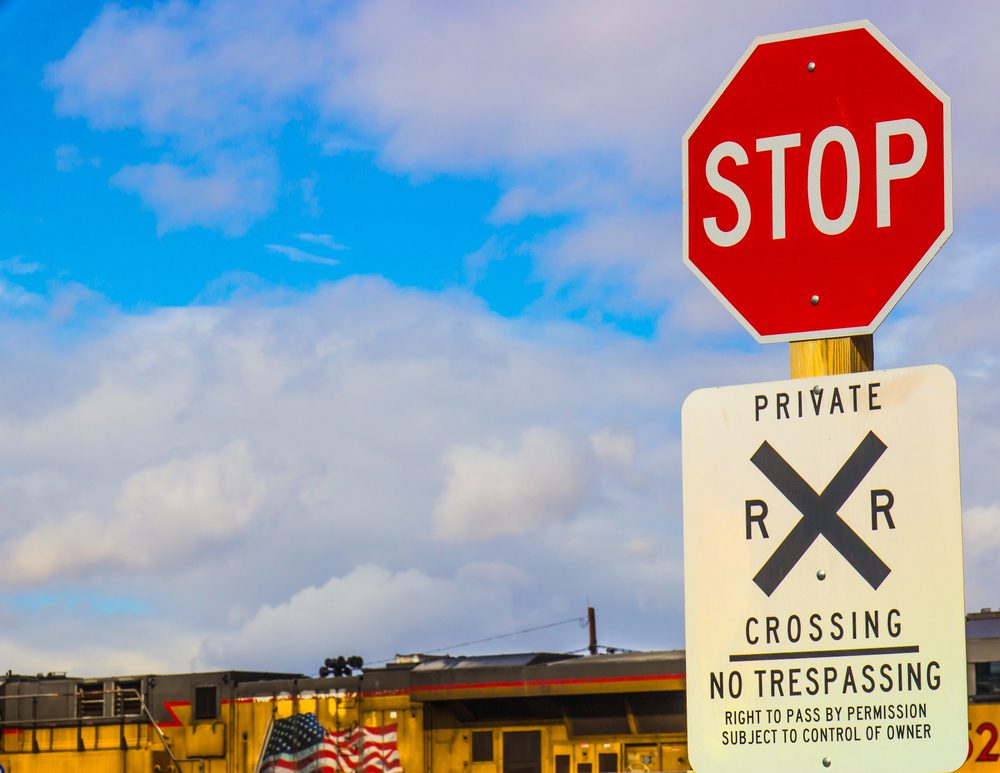
Signage rounds out the list. Crossbucks or stop signs must stay visible and in good repair. Public crossings have standardized signage maintained by the road authority; private crossings depend on the property owner to provide and maintain appropriate warning signs. Staying on top of all these items gets much easier when you build them into a regular inspection schedule.
Farm Crossings and Agricultural Property Responsibilities
Farm crossings are among the most common private crossings in the country, and they carry their own practical challenges. A farm crossing typically exists because a railroad was built through agricultural land, and the crossing lets the landowner reach fields, pastures, or buildings on the other side.
Farm crossing responsibility follows the same general framework as other private crossings, but the day-to-day reality is tougher. Farm equipment is heavy, wide, and slow, so the crossing surface takes more punishment than one that only sees passenger vehicles. Combines, grain carts, and loaded wagons crack concrete panels and compress approach grades quickly if the crossing wasn’t built for that weight.
Seasonal traffic patterns affect condition too. During planting and harvest, a farm crossing may see dozens of heavy equipment movements a day. During the off-season, almost none. That uneven use means the crossing can deteriorate fast during peak periods, and the damage often doesn’t get addressed until the farmer has time to deal with it months later.
If you own or lease agricultural property with a farm crossing, inspect it at the start and end of each busy season. Look for surface damage, approach erosion, drainage problems, and sightline obstructions. Handling small issues before they grow saves money and keeps the crossing safe for your crew and anyone else using it.
For farm crossings that have reached the end of their useful life, a full crossing replacement or renewal is usually more practical than continuing to patch a surface that’s past effective repair.
Keeping Your Private Crossing Safe and Functional
Private railroad crossing maintenance is an ongoing responsibility, not something you handle once and forget. The surface, approaches, drainage, sightlines, and signage all need regular attention, and letting any one of them slip creates safety risks for your people and potential liability with the railroad.
If you’re unsure about your responsibilities, start by reviewing your private crossing agreement so you know what you’re required to maintain and what the railroad handles. From there, set up a regular inspection schedule covering all the components above, and address small problems before they turn into expensive ones.
When it’s time for repairs or a full renewal, Track Tech Inc. has the experience and equipment to get it done right. We handle everything from surface replacement and approach grading to drainage improvements and complete grade crossing reconstruction. Get in touch with our team and we’ll walk the crossing with you and put together a plan that fits your property and your budget.